


Current State of Logistics Industry Development in Vietnam
According to the Vietnam Logistics Business Association (VLA, 2024), the size of the Vietnamese logistics market in 2024 is estimated at US$42 billion, contributing 4.5% to GDP. The industry maintains an average growth rate of 15% per year, exceeding the overall growth capacity of the economy, making Vietnam one of the fastest-growing logistics markets in the ASEAN region. This growth reflects the expansion of exports, increasing domestic transportation demand, and the growing number of domestic and foreign businesses.
The market is currently clearly differentiated between basic services (transportation, warehousing, logistics) and high-value services (3PL, 4PL, efficient supply chain management), with over 90% of businesses being small and medium-sized enterprises (SMEs). According to the 2023 Logistics Performance Index (LPI), Vietnam ranked 43rd out of 139 countries, an increase of two positions compared to 2018. On-time performance and international shipping scored highly, while infrastructure and customs efficiency remain limited, reflecting the inconsistent quality of road and sea transport and administrative procedures. Logistics costs currently range from 16-18% of GDP, significantly higher than Singapore (8-10%) or Thailand (12-14%), creating opportunities for cost optimization, improved operational efficiency, and enhanced national competitiveness.
– Regarding the structure and capacity of businesses, Vietnam currently has approximately 4,000 logistics companies, of which over 90% are small and medium-sized enterprises (SMEs). The majority of domestic businesses primarily provide basic services such as transportation, warehousing, and forwarding, while high value-added services such as 3PL, 4PL, and integrated supply chain management are mainly handled by foreign companies, such as DHL, Kuehne+Nagel, and Maersk Logistics.
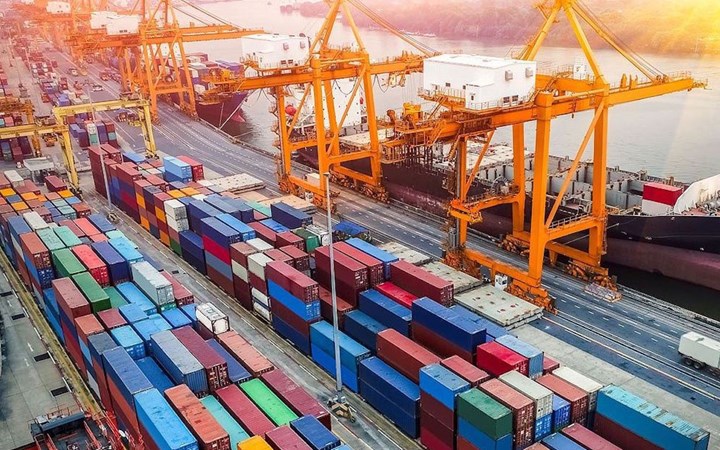
– Regarding infrastructure and logistics connectivity: Vietnam’s logistics infrastructure has improved significantly in recent years. Currently, road transport accounts for about 75% of freight volume; sea transport handles 90% of import and export goods; and rail and waterway transport only utilize about 5% of stored goods, indicating significant untapped potential.
– Regarding policies and management mechanisms: The Vietnamese government has prohibited the implementation of several strategic documents for the development of the logistics industry, notably Decision No. 221/QD-TTg (2021) on the Action Plan to enhance competitiveness and develop logistics services until 2025, with a vision to 2035. Key objectives include developing operational methods, building key logistics centers, reforming customs procedures, and closing operations – the fourth point.
– Regarding technology and digital transformation capabilities: Digital transformation is becoming a decisive factor in improving the efficiency of the logistics industry. Some businesses have developed operational management systems (TMS) and warehouse management systems (WMS), along with IoT applications in tracking and Blockchain in document management.
– Regarding technology and digital transformation capabilities: Digital transformation is becoming a decisive factor in improving the efficiency of the logistics industry. Some businesses have developed operational management systems (TMS) and warehouse management systems (WMS), along with IoT applications in tracking and Blockchain in document management.
Development Trend of the Logistics Industry in Vietnam
To meet operational needs and enhance competitiveness, the Vietnamese logistics industry is developing along several key trends that shape the operational methods and development strategies of businesses in the present and near future, including:
– Digital transformation and logistics information: The development of AI, Big Data, IoT, and blockchain is opening up a trend of smart, forward-looking logistics, optimizing operations, reducing costs, and increasing real-time cargo tracking capabilities. Vietnam demonstrates the emergence of many domestic logistics platforms, supporting business connectivity, increasing operational transparency, and providing enhanced results chains.
– Green logistics and sustainable development: The trend of reducing CO2 emissions, using renewable energy, and environmentally friendly vehicles is a key focus for logistics businesses. Some companies are beginning to aim for “carbon neutrality” certification and applying green standards in warehousing operations, in line with the national sustainable development orientation.
– Regional linkages and integration: Vietnam is gradually forming national logistics centers in Hai Phong, Da Nang, Ho Chi Minh City, and Can Tho, while providing cross-border supply chain connectivity within the Mekong sub-region and ASEAN. This expansion of integration is being developed to enhance regional competitiveness.
– Development of high-quality human resources: In the trend of integration and digital transformation, universities, research institutes, and logistics businesses are strengthening cooperation in training, practice, and providing international certifications. Many in-depth training programs on digital logistics, supply chain management, and international skills are being developed and advised to create a workforce with the qualifications and capabilities to compete globally.
The Vietnamese logistics industry is currently in a period of strong development, playing a crucial role in enhancing national competitiveness and international economic integration. Singaporean businesses seeking business opportunities, exporters, and reputable Vietnamese logistics companies should consider the Vietnam International Sourcing 2026 (VIS) from September 3-5, 2026, at the Saigon Exhibition and Convention Center (SECC), 799 Nguyen Van Linh Street, Tan Phu Ward, District 7, Ho Chi Minh City, Vietnam. The fair will bring together over 600 Vietnamese manufacturers/exporters showcasing 12,000 export-eligible products across the following sectors: Food and Beverages; Household Goods; Lifestyle & Personal Care; and Export Supply Chain Exhibition. This is an annual event organized under the direction of the Ministry of Industry and Trade (Foreign Market Development Department) and by Adpex Joint Stock Company – a professional trade exhibition organizer in Vietnam. Participating organizations include various industry associations. Vietnamese businesses, manufacturing and exporting companies, international retail and distribution corporations (including Acon, Amazon, Central Retail, Carrefour, Coppel, Decathlon, MegaMarket, Walmart, etc.), foreign companies supplying machinery, equipment, and raw materials for production in Vietnam, and supply chain service providers (including logistics, banking, and insurance companies).
Interested businesses are invited to visit the event website at https://www.vietnamsourcingexpo.vn/en/
or contact the Vietnamese Trade Office in Singapore via the following contact information:
VIETNAMESE TRADE OFFICE – EMBASSY OF VIETNAM IN SINGAPORE
Address: 10 Leedon Park, S267887
Email: [email protected]; [email protected]
Mobile (Whatsapp/Viber): +65 89075885 (Ms. Quynh)